
By: Avi Feldman mailto://[email protected]
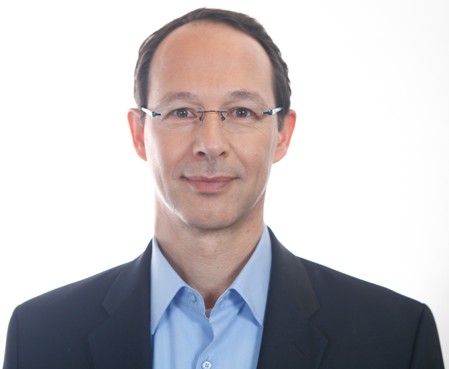 As the manager of an investment firm that invests in entrepreneurship and the development of new renewable energy technologies, I often hear the skeptical (not to mention carping) question – is there even a place for investments of this kind in Israel today? Moreover, given the large gas discoveries off the coast of Israel, do we even need energy from other sources?
Opponents of investments point out that governments in most Western countries have aggressively cut subsidies for renewable energy production in the past two years. And the industrial side has not always been happy either; a number of large investments have gone down the drain in Israel (such as Better Place’s electric car venture) and around the world (Beacon Power, A123), and industrial and technology giants (such as Siemens) have decided to exit this field, partly due to the global drop in prices of solar panels imported from China in recent years.
I must admit, between you and me, that the questions are good and the answers are challenging. The answer comes from the place where all the answers in the business world should come from – the existence of unrealized economic potential.
Increase in demand
There is not enough space here to analyze the various trends in the global energy market in recent decades, and it is enough to look at two key figures that are important for understanding the major trends. On the one hand, the continued growth in demand for energy sources, both in developed markets (Europe, North America), in developing markets (Russia, East Asia and South America), and in underdeveloped countries (mainly African countries), and on the other hand, the expected shortage in the supply of traditional energy sources – coal, oil and gas, even if we include in the equation all the known reserves that have not yet been produced. In the long term, there is a broad consensus among researchers and economists that demand is increasing several levels above supply. According to the International Energy Agency’s yearbook, by 2035, half of all new energy production facilities built will be based on renewable energy sources.
It follows that the basic potential exists, and therefore it is necessary to try to understand why it is so difficult and slow to find technological alternatives for producing energy from renewable sources, while referring to the market side and the development side.
Economic adaptation
The main players on the market side are infrastructure and electricity companies that concentrate most of the activity. These companies establish heavy production, transmission and distribution infrastructures that require huge budgets to set up. They are expected to operate in a reliable and stable manner in the supply of energy, and therefore they operate very conservatively in adopting new technologies and demand, quite reasonably for the economic and social responsibility placed on them, to prove the efficiency and stability of those technologies over time, before installing them on a large commercial scale.
On the other hand, most of the existing technologies are still in their infancy. With the exception of wind energy, almost all of the existing technologies have been developed in the last two decades (most of them even in the last decade) and are still not economical, in the sense that they find it difficult to compete in a competitive market with the price of energy from mineral sources (what is commonly referred to as Grid Parity). What every plant knows how to do naturally with such great efficiency – efficient energy production from the sun (photosynthesis) – we find it difficult to do at a worthwhile price.
The very recognition that we are at such an early stage in the development of efficient renewable technology should challenge us and indicate the enormous potential that we have not yet begun to realize. And we have not yet addressed, even in the slightest, the environmental aspect and its impact on the feasibility of investing in renewable energy. Therefore, the reduction of government subsidies in most developed countries for electricity tariffs from renewable energy (and especially from solar panels) is not an indication of the market’s lack of interest in these technologies, but rather of a required economic adjustment of public spending for them in light of their declining production costs.
The Israeli Angle
An interesting point is how we in Israel are perceived by the world. The well-known research firm Cleantech Group published last year the “Fourth Annual Global Cleantech 100” which points to the ability of Israeli industry and development to produce Leap Frog technological innovation. According to their findings, Israel is ranked No. 2 (!) in the world in the innovation index in the field of renewable energy, and No. 1 if you look at the number of companies per capita. The study also states that Israel has a special leadership position due to the fact that the companies that are established here are both innovative and market-oriented internationally. Eight companies from Israel have slipped into the list of 100 leading companies in innovation in their index, far above our relative share in the global R pie.
The development of renewable energy can move us to better places not only in the international arena but also in the local arena: in increasing competitiveness and strengthening the consumer’s position – new technologies can bring about a structural change and real privatization of the electricity sector, in employment – this is a diverse professional range that allows the absorption of unemployed populations, in the development of the periphery – this is a branch whose relative advantage is precisely in the periphery, and in a more efficient use of the limited national resources.
However, the innovative technological development of green energy also has additional aspects – while investments in technology industries, in which Israel excels and venture capital funds are active, such as IT, Homeland Security (HLS) and medical equipment, rely on technological manpower, which has accumulated knowledge and experience in development in the “incubator” of the army and the defense industries, renewable energy does not have such a natural “incubator”. Most of the innovation in this field is based on basic academic research. The technological journey of most entrepreneurs in this field must therefore be done in close cooperation with researchers from academia and not with friends from the army, from “industry” or from the previous start-up in which they worked.
While in other fields the required technological experience is in the same field itself, in renewable energy most fields require a background in a wide range of technologies
and often also clear multi-disciplinary knowledge. Moreover, since, as we have already mentioned, the electricity and infrastructure companies that make up the demand side of the market require proof of feasibility, the pace of maturation and integration of new developments in the market is slow. Very slow. The meaning is that the technological field of renewable energy behaves differently from other technology industries and therefore its investors must also prepare to invest differently and build the companies differently.
The difference is expressed in the need to go to the base of the knowledge pyramid and accompany companies in a gradual, patient, lean and efficient manner, from one milestone to the next. Cooperation with academia, with large equipment suppliers and with additional industries must be maintained throughout the development. Customers and investors must be proven that the technology is stable and can be relied upon for long operating periods. And above all, investment must be maintained with the appropriate developments over a number of investment rounds and not try to redeem the “chips” as quickly as possible.
The need for technological and financial depth
The investment company “Capital Nature”, which I manage and lead, is trying to go exactly this new way. The company’s guiding vision is to be the leading investment body in the field of renewable energy in Israel and to position the technological center in the Arava as a recognized international center of excellence. Already today, the company is the only investment body specializing in renewable energy only, and operates infrastructures that do not exist in other R and investment frameworks.
The “Capital Nature” model is unique – choosing projects at a very early stage, sometimes still in academia, or immediately at the beginning of technological development, and accompanying the venture throughout the development period, both in investment (including follow-on investments) and in infrastructure, until proof of its commercial feasibility. For this purpose, the company’s investor group is composed of companies with diverse capabilities – industrial, technological and financial. Elbit, Rafael and Ormat, which are leading international technology companies in their fields of activity, provide “Capital Nature” with technological depth expressed in the ability to select and accompany the development of companies to the market itself. Direct Insurance, ProSeed and Consensus (a British investment company) provide the company with financial depth and a developed business network of relationships. These capabilities are at the service of the entrepreneurs and contribute to accelerating the technological and business development of the companies and their exit to the international market in the most appropriate manner.
Since the beginning of 2012, “Capital Nature” has invested in 6 start-up companies and 4 joint applied research projects with academia. The expectation is that the pace of new investments will accelerate this year, alongside follow-on investments in the more mature companies. The company has a technological R center and an experimental field in the Arava (near Kibbutz Yotvata), and each new start-up company operating within this framework receives full infrastructure assistance for its activity – offices, laboratories, experimental areas, etc.
The experimental field is also open to the activities of additional companies, in which “Capital Nature” is not invested, and they can enjoy within this framework a range of dedicated services – maintenance, inspection, verification and also connection to the electricity grid at a special tariff for a pioneer facility.
The author is the CEO of “Capital Nature” (Capital Nature- www.capitalnature.com), and the chairman of the Cleantech Committee at the Israel Advanced Industries Association (IATI)