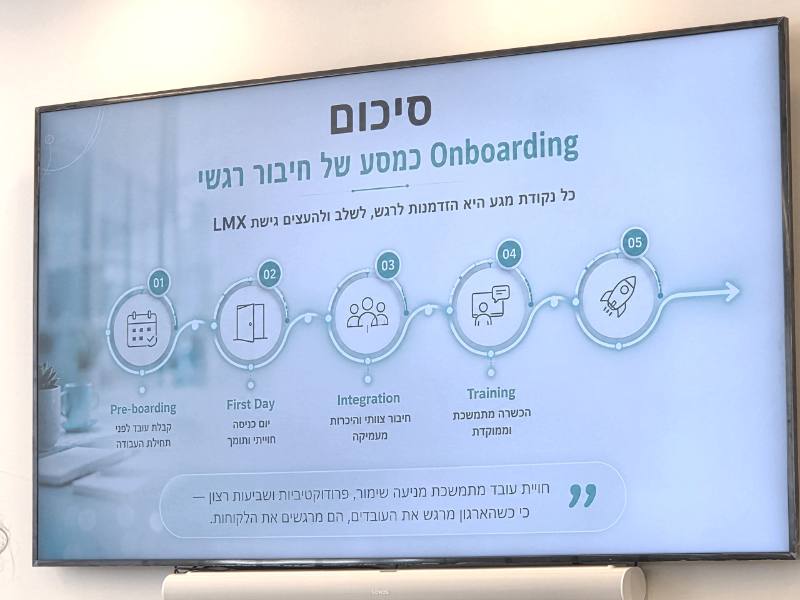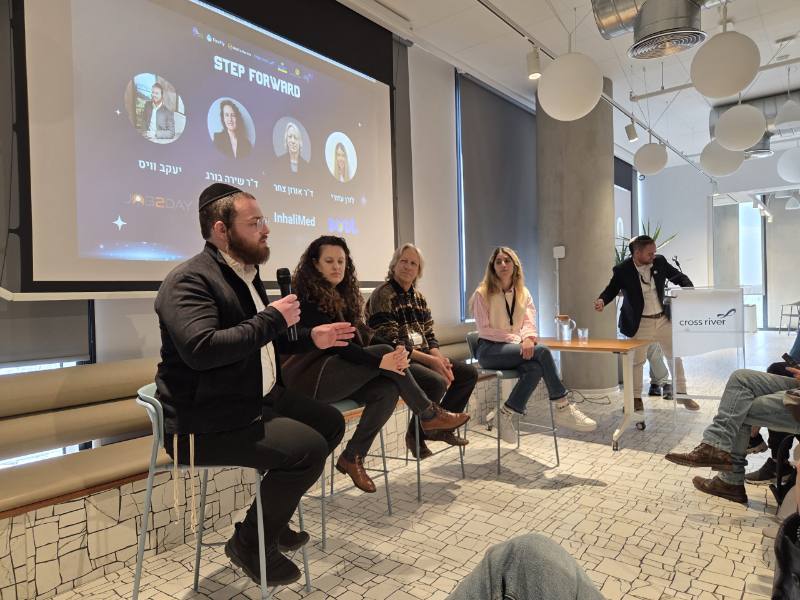

With the start of the new year, we checked with CEOs and CTOs in Har Hotzvim what technologies are expected to lead this year. We received surprising answers. Everyone pointed to this or that technology but made it clear: there are people behind the technology, we must think about them. They talk about finding a balance between work and family life, about giving consideration and meaning to the professional who uses technology in their profession, about creating a personal and warm work environment, and about an urgent need to solve the air pollution problem that threatens to destroy our health
CEO of Profile Company: “The penetration of smartphones will require us to find a balance between work and family life and private life”
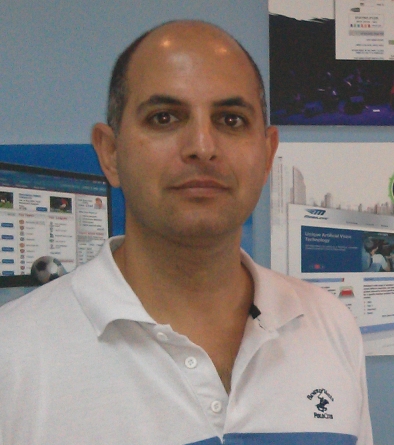 Eli Shahaf, CEO of Profile, a company that specializes in user interface design and website development, believes that cloud computing will continue to lead in the coming year, but also knows well the price it exacts when it allows working from smartphones anywhere and at any time. Cloud computing brings the promise of higher productivity and availability, but on the other hand, Shahaf warns that a solution must be found to balance work and private life.
What organizational technology will change the way we work this year?
Shahaf: “Transferring organizational applications, databases and files to cloud computing changes and will change the nature of organizational computing dramatically. This change, which began with the removal of mail servers from the organization and openness to cloud systems such as SalesForce, continues to move information systems to the cloud environment and enjoy its advantages. The transition to the cloud eliminates dependence on the physical location of the workplace and enables activity from smartphones and the like. This means more productivity and more availability.”
What technology is expected to change our lives on a personal level?
Shahaf: “The ability to operate systems and access information through smartphones affects and will affect our personal lives. Technology makes us available around the clock, information flows to us and it is difficult to disconnect from it. It is difficult to separate between working hours and private hours, and in fact our private time for rest is slowly being conquered.
The workplace and we must prepare for things and know how to set boundaries and create a separation between work time and private time because, in the end, long-term productivity at work requires rest time and a balance between work time and family!
VP at BrightSource: “Technologies that reduce air pollution are the ones that will break through this year”
Yossi Elia, VP of Electrical Engineering and Control at the cleantech company BrightSource Technologies, believes that this year will bring a breakthrough in cleaner technologies designed to protect our health and reduce pollution  the problematic air that exists in the world.
What technology is expected to change our lives on a personal level?
“The problem of air pollution in the world is well known, including its devastating consequences on human health. A large part of the air pollution in the world is caused by the process of electricity production in the world’s conventional power plants that burn polluting fuels such as oil, coal and gas. BrightSource’s solar power plants can prevent this pollution. BrightSource’s alternative is solar power plants that produce “clean” electricity from the sun, without pollution. The news for the coming year is the establishment of the “Ashelim” thermo-solar power plant in the Negev, which will be the largest in the Middle East and will produce MW121. In addition to reducing pollution in the country, a unique technology for wireless control – Wireless Solar Field control – has been developed for the station in Ashelim (and those that follow). This technology will reduce the time it takes to set up power plants of this type and thereby reduce the total cost of the electricity produced by this technology.”
As the price of electricity produced by this “clean” technology approaches the price of electricity from polluting plants, the world will build more plants that will protect our health. The wireless control technology will allow us to have better control over every station in the world, and all this will be done from the control room at BrightSource in Har Hotzvim, Jerusalem.”
VP of R at Coral-Or: “Creating a personal and warm work environment is no less important than adopting another organizational technology”
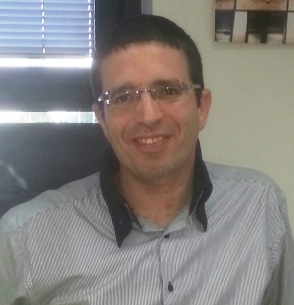 Yair Fanian, VP of Research and Development at the start-up company Coral-Or Technologies, marks the technologies that will lead the year that has just begun, but emphasizes that there is no substitute for good human relations:
What organizational technology is expected to create a significant change in organizations this year?
Fanian: “In my role as manager of a large group of people in the past and present, I have been exposed to many technologies that have indeed changed the organizational culture and affected the employees and even me. Such technologies have affected employee efficiency, communication between employees, the transfer of information in the organization, and more. Usually, such technologies were mainly aimed at improving efficiency and, of course, the company’s profit.
Personally, I have a feeling that sometimes from an excess of technologies we forget the real thing, which is the person behind the employee. Therefore, on this issue, I prefer to go back to being “old-fashioned”. Especially at the beginning of the year, I prefer not to focus on another technology but to emphasize the “non-technological” aspect of employee management. I believe in openness with employees and in creating a personal and warm work environment, where every employee feels like an important part that completes the puzzle. The workplace should be a place that every employee is happy to come to every morning and that the employee is comfortable spending a significant part of their day in. As Confucius says: ‘Choose a job you love, and you will never have to work a day in your life’. From my experience, such an approach ultimately yields the most benefit from any other technological approach!”
What technology is expected to change our lives on a personal level?
“There are countless technologies that we are exposed to every day. The fundamental change in the field of introducing new technologies into our lives began with the intensive use of smartphones and tablets by all of us.
Today there are about a million applications available for download, but at the end of the day, most of us use no more than five applications on a daily basis. Of course, most of the applications ultimately fail to reach a large number of users, so it is a bit difficult to predict what technology will change our lives in this era. I chose to focus on the technology of Coral-Or, which hopes to make a change in the field in which we specialize, and in the end, its impact will even reach the individual user.
Coral-Or develops a unique technology for analyzing end users of applications, websites and any other digital product, in order to improve the quality of the product or service and its adaptation to the nature, personality and needs of this user. In a world where we are drowning in a sea of information and products that surround us, only efficient software will be able to filter out the noise for each and every one of us and expose us to the content and needs that are unique to us.”
Medinol’s approach for the new year: Looking at the “Patient-Physician-Medinol Employee” Paradigm
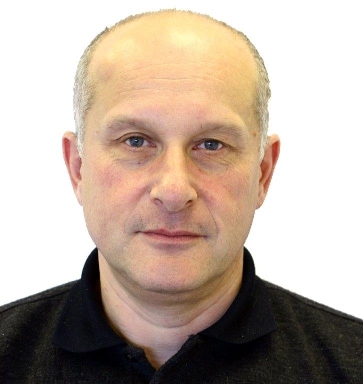 Innovation is not only about technology, it’s also about the connection between the people who develop the technology and the end-users. Oleg Weizman, Ph.D., VP Innovative Technologies at Medinol, a global manufacturer of medical devices which are implanted in the human body, reviews Medinol’s concept for this coming year:
”I believe that the paradigm “Patient-Physician-Medinol employee” approach is a successfully functioning model of Israeli High-Tech Company.
Medinol identifies three critical interfaces: Patient, Physician and Medinol employee. Such a triangular orientation, with Patient health obviously at the highest priority, imposes stringent requirements on Medinol’s product quality and is therefore reflected in the selection of innovative technological solutions, bringing us to the frontiers of modern vascular medicine.
Several Medinol products combine the traditional medical device technologies and precise drug delivery. We are developing coronary products whose manufacturing technology unites the simplicity of Medinol’s flat manufacturing approach and accurate drug deposition independent of different environmental conditions and substrate variability. Use of modern polymers, especially designed to achieve compatibility with human arteries, make the drug delivery more controllable without compromising patient safety.
A unique c-beam technology for the surface treatment of metals, drugs and polymers has been developed to create an interface between the device surface and human tissue, improving the tissue response, reducing any inflammatory reactions and thus improving the clinical outcomes.
The patient safety and treatment efficacy depend directly on the physician’s procedural success. Among the many design innovations, I would like to mention a unique spring tip design and a lubricious coating allowing fast and accurate implant delivery. These provide the physician with excellent catheter maneuverability, allowing access to remote and tortuous lesions, reducing X-Ray exposure time and reducing the duration of the clinical procedure and the post-procedure period.
Implementation of these complex technologies requires Medinol employees who are highly educated and motivated. Achievement of the required high quality is nigh impossible by a manual production approach. Therefore, Medinol has implemented and further develops highly effective methods of automatic manufacturing, replacing manual operations. Automatic optical inspection in conjunction with Medinol’s flat manufacturing approach creates a unique technological platform where all visible defects can be eliminated without the standard microscopic inspection that is widely used in medical device industry.”